Equilibrium: The Undergraduate Journal of Economics: Volume 15
Created with Adobe Photoshop, Adobe InDesign, and Adobe Illustrator
2025
We were given just two weeks to design the issue after receiving the final article content, which required fast-paced decision-making, strong time management, and efficient communication. Together, we created four drafts before finalizing.
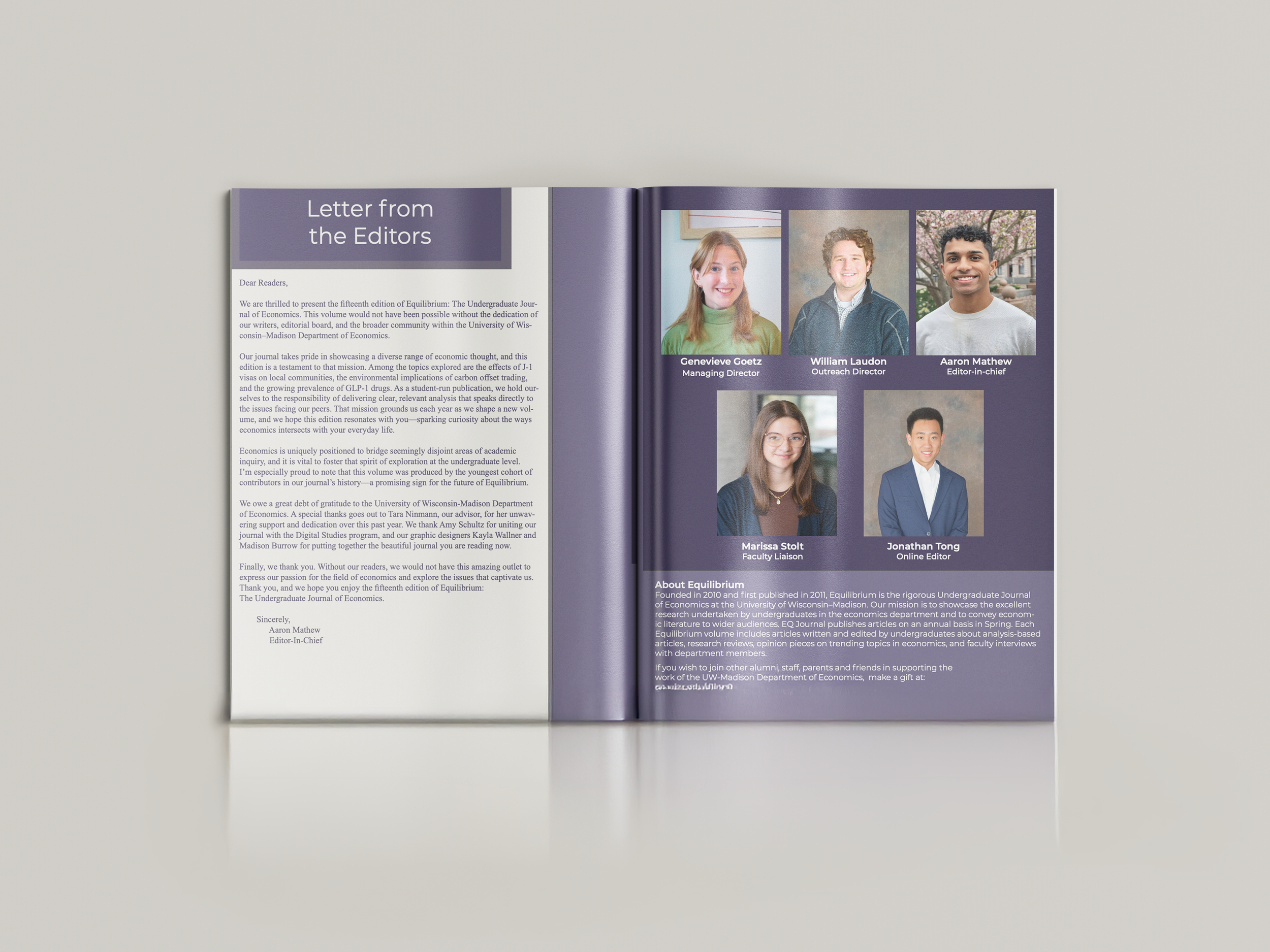
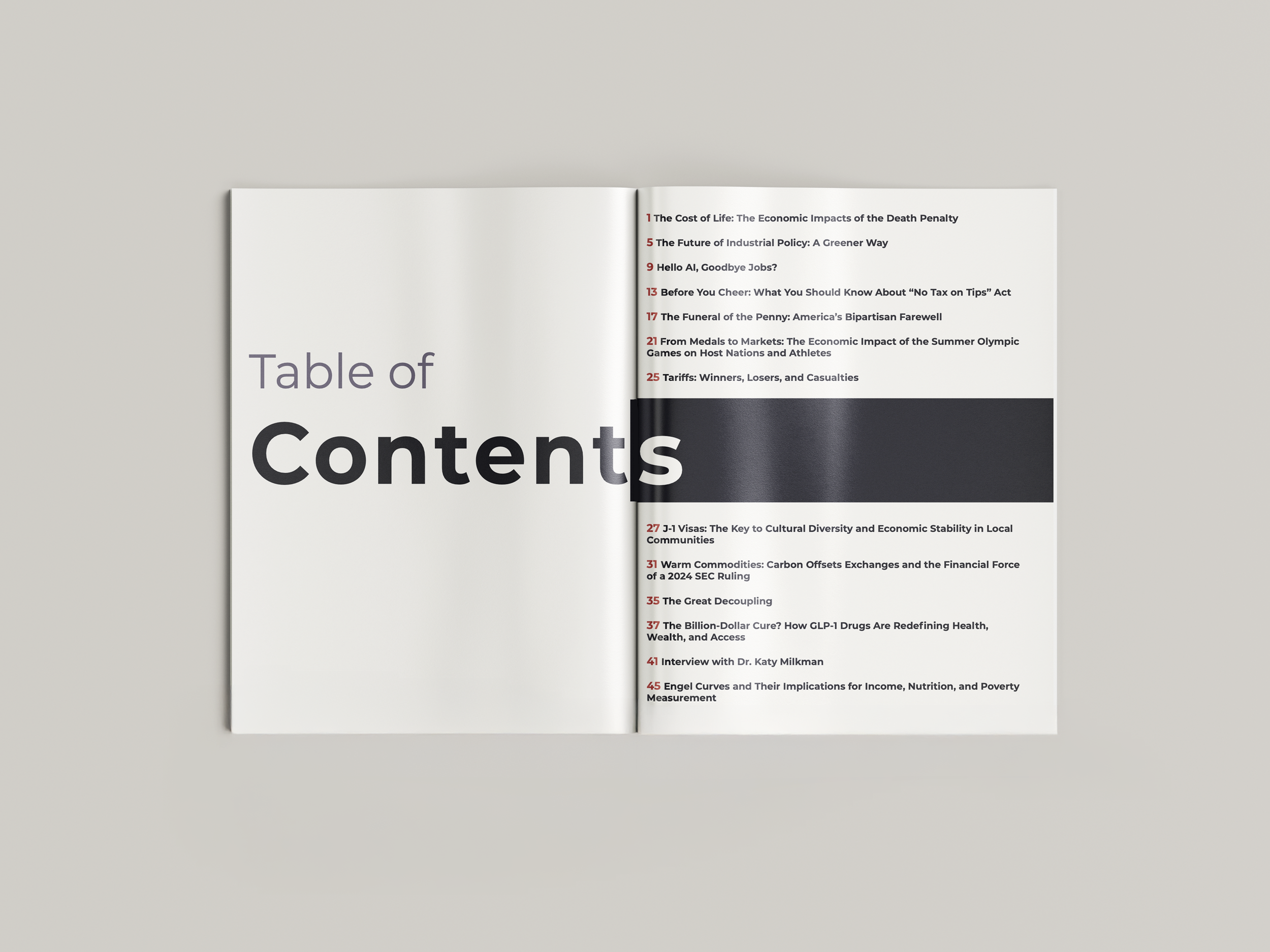
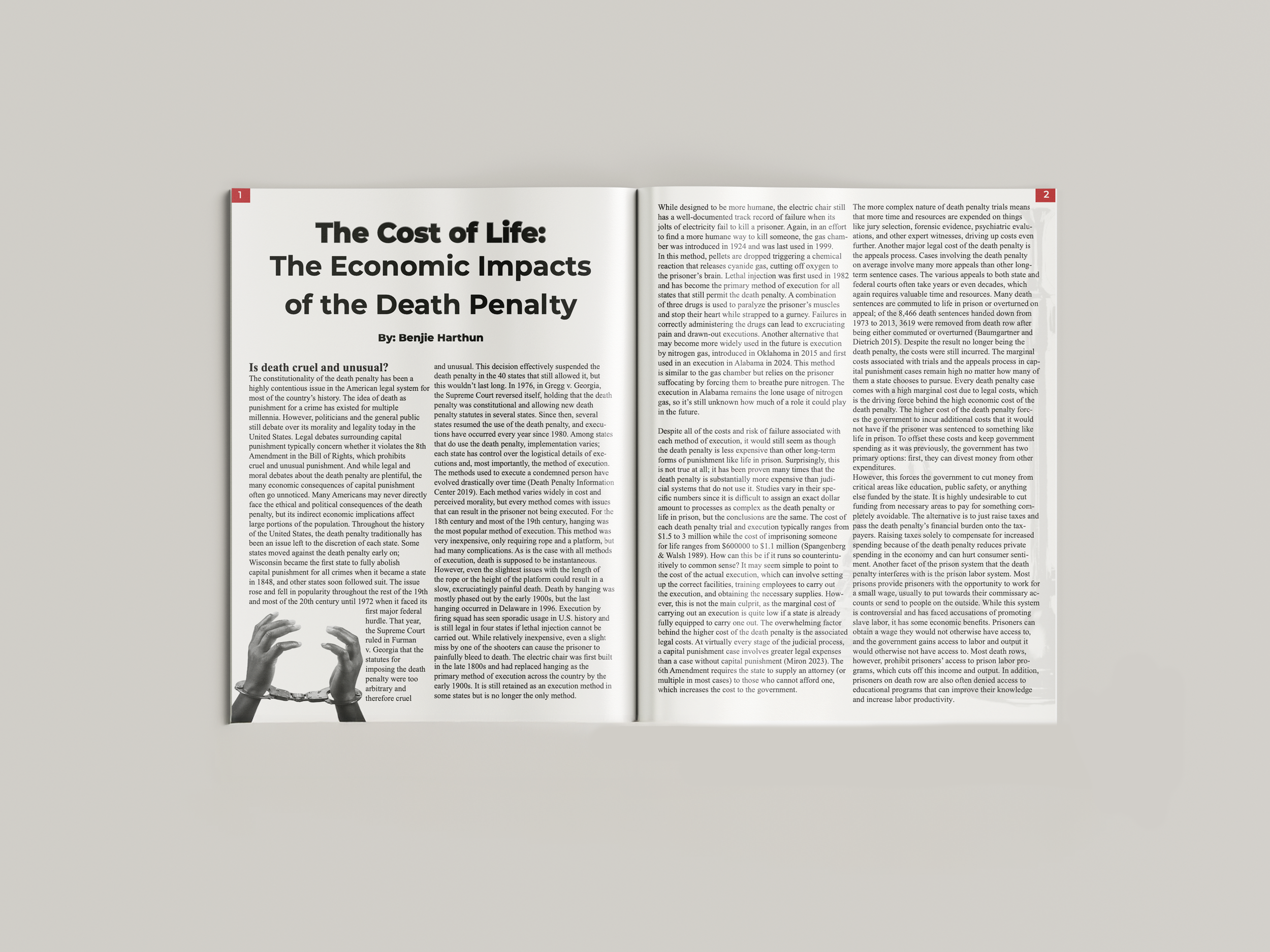
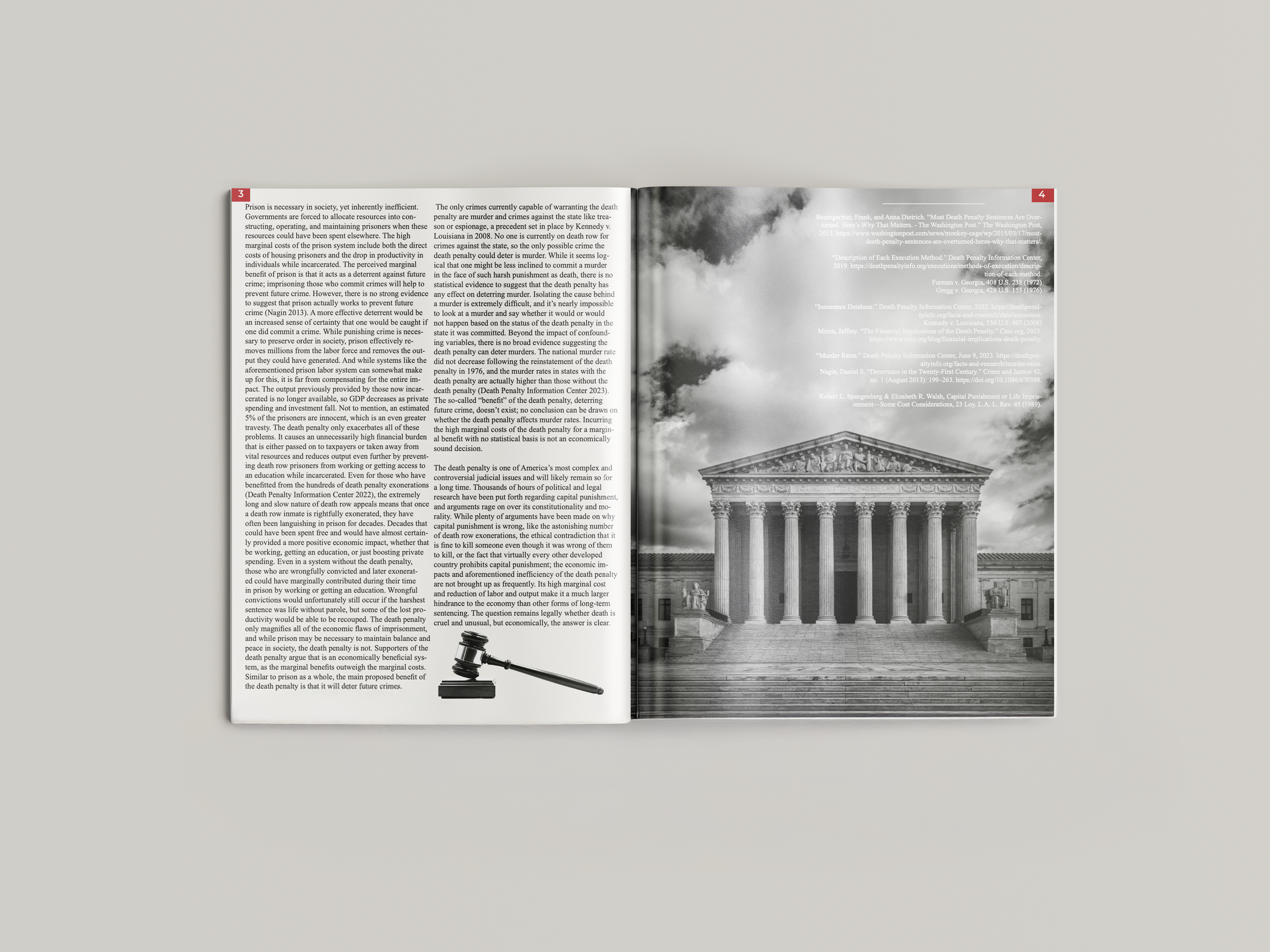
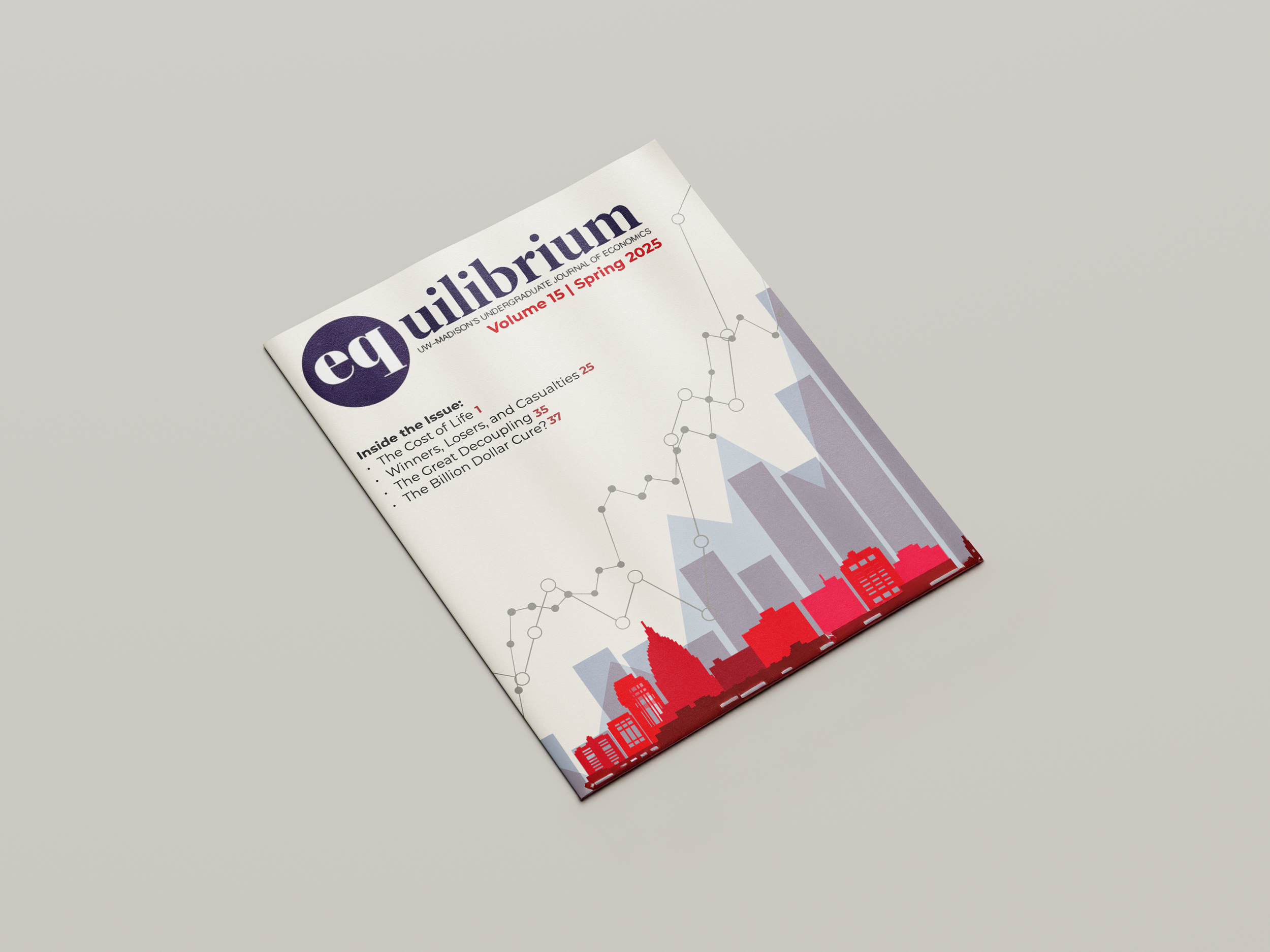
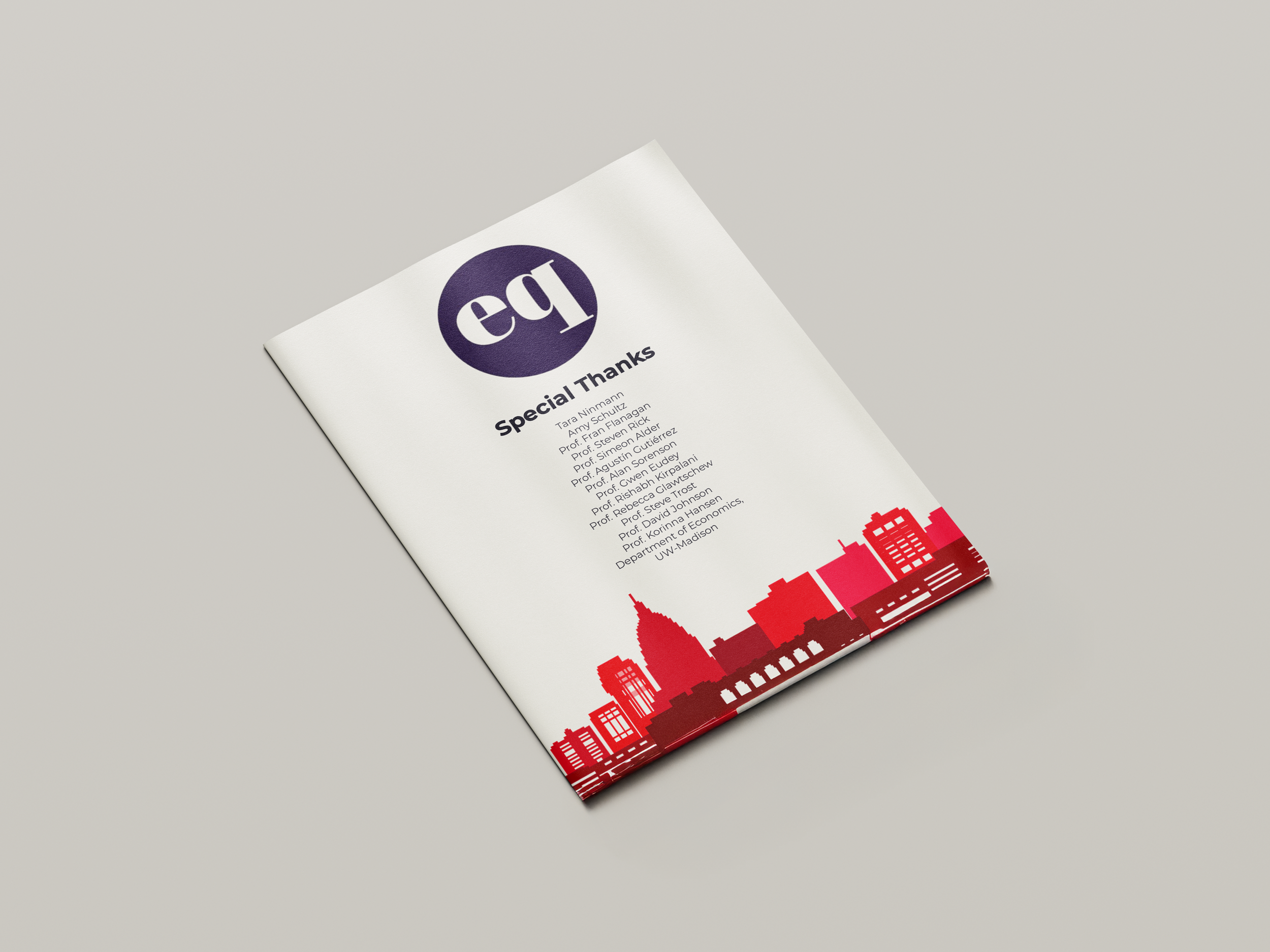
I designed six article spreads, the Letter from the Editors page, and the Table of Contents, as well as creating the skyline illustration for both the front and back covers in Adobe Illustrator. We were given only two weeks to design the entire issue after receiving the final article content, which required quick decision-making, strong time management, and effective communication throughout the process.
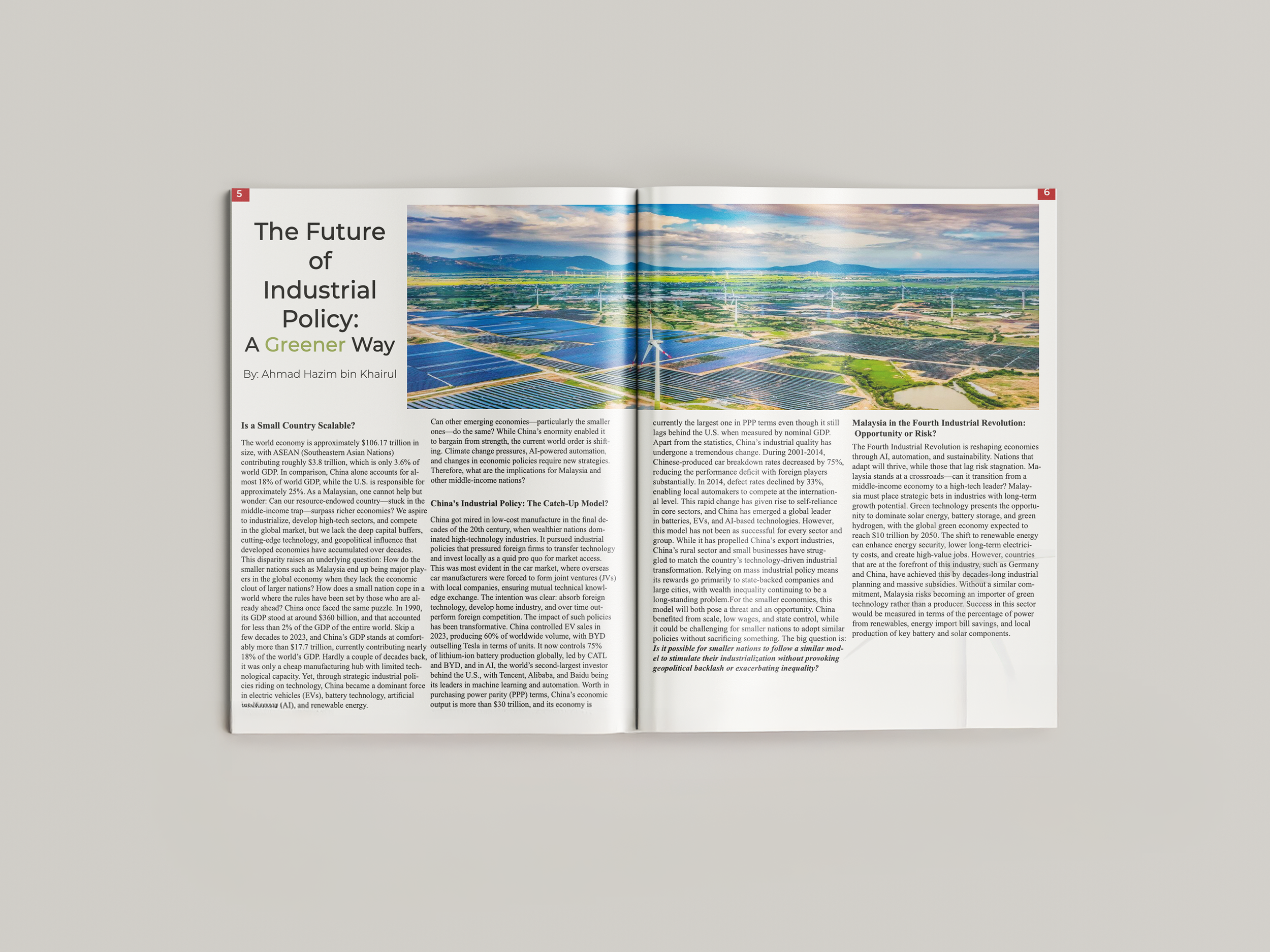
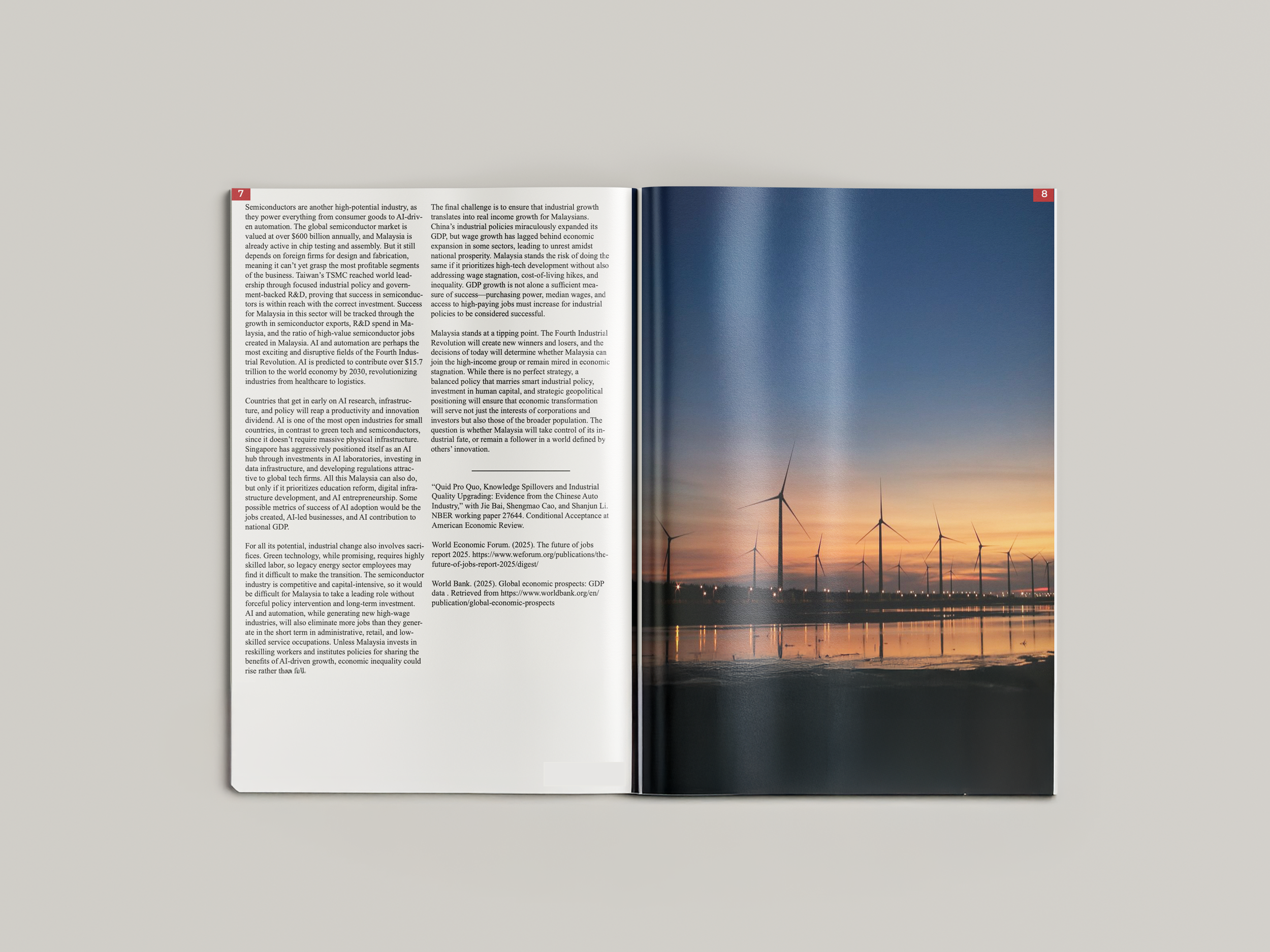
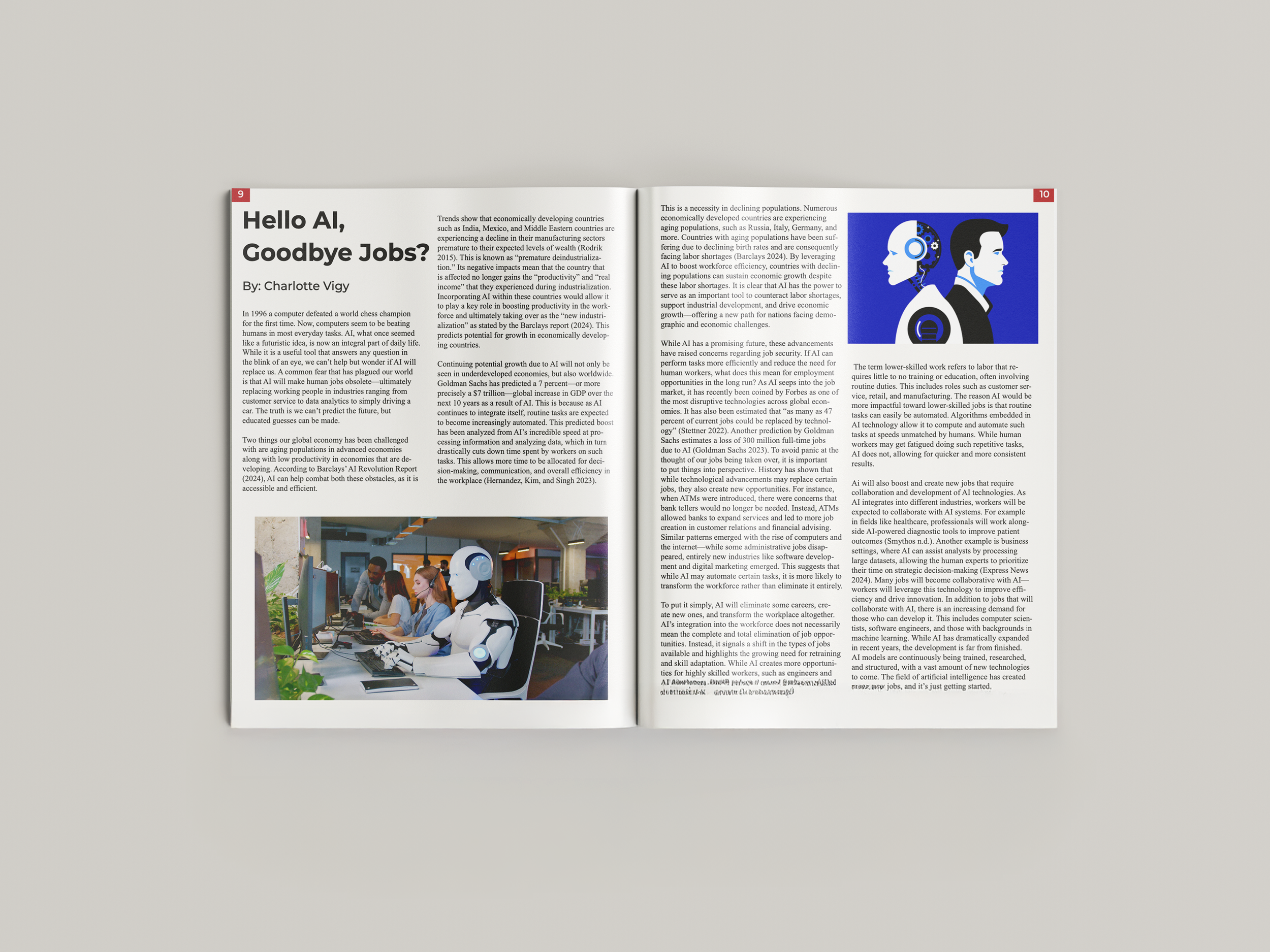
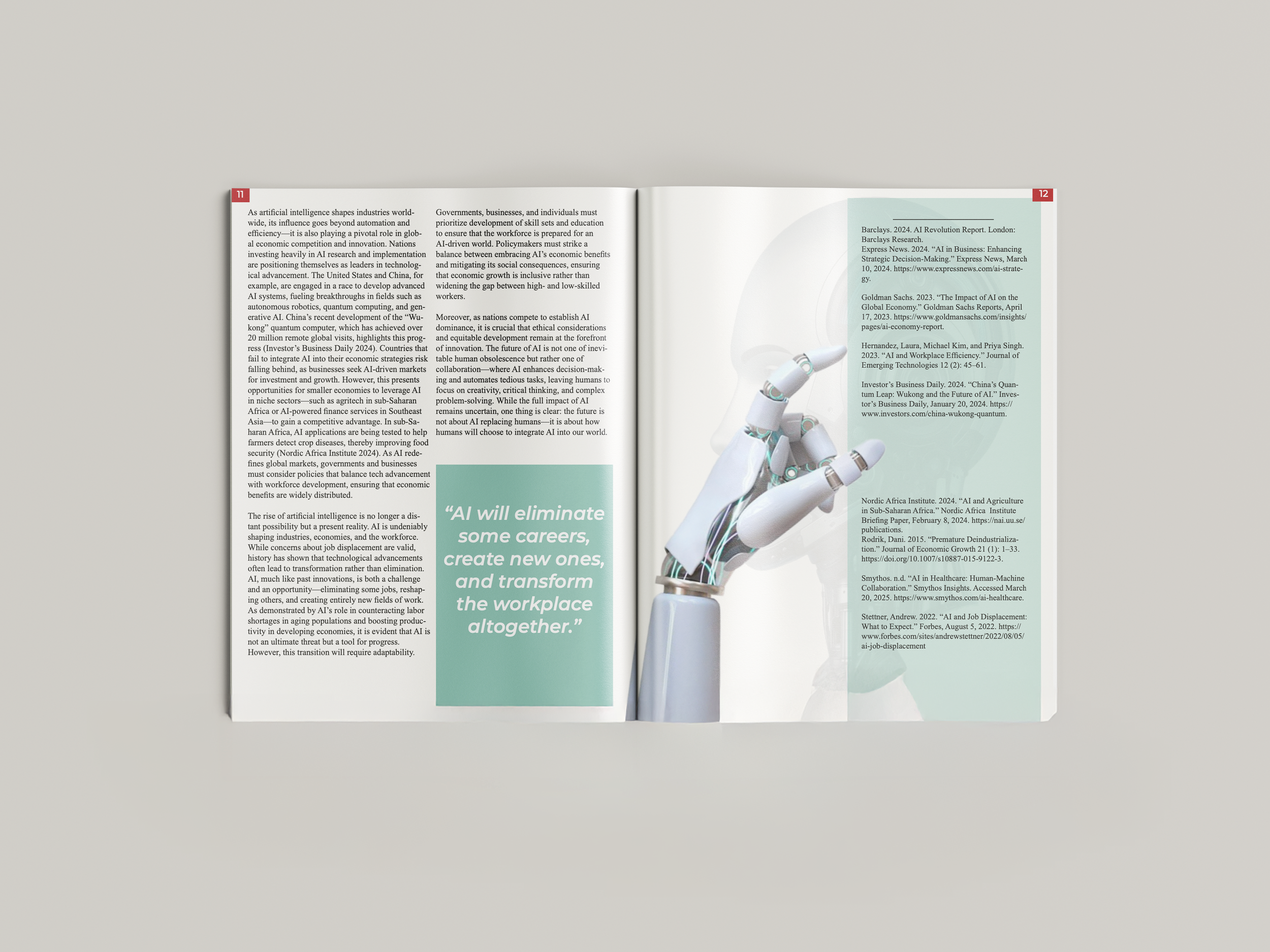
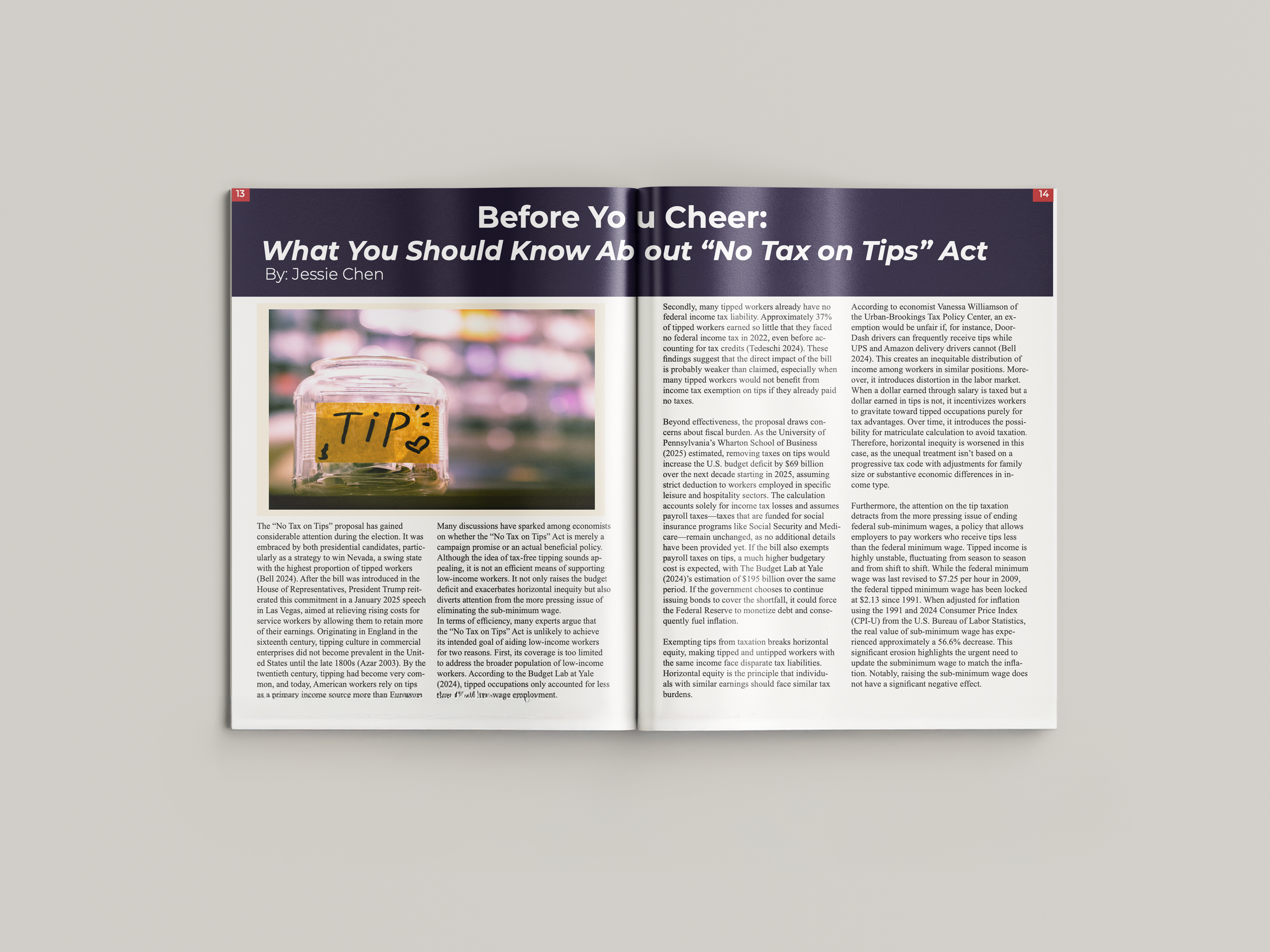
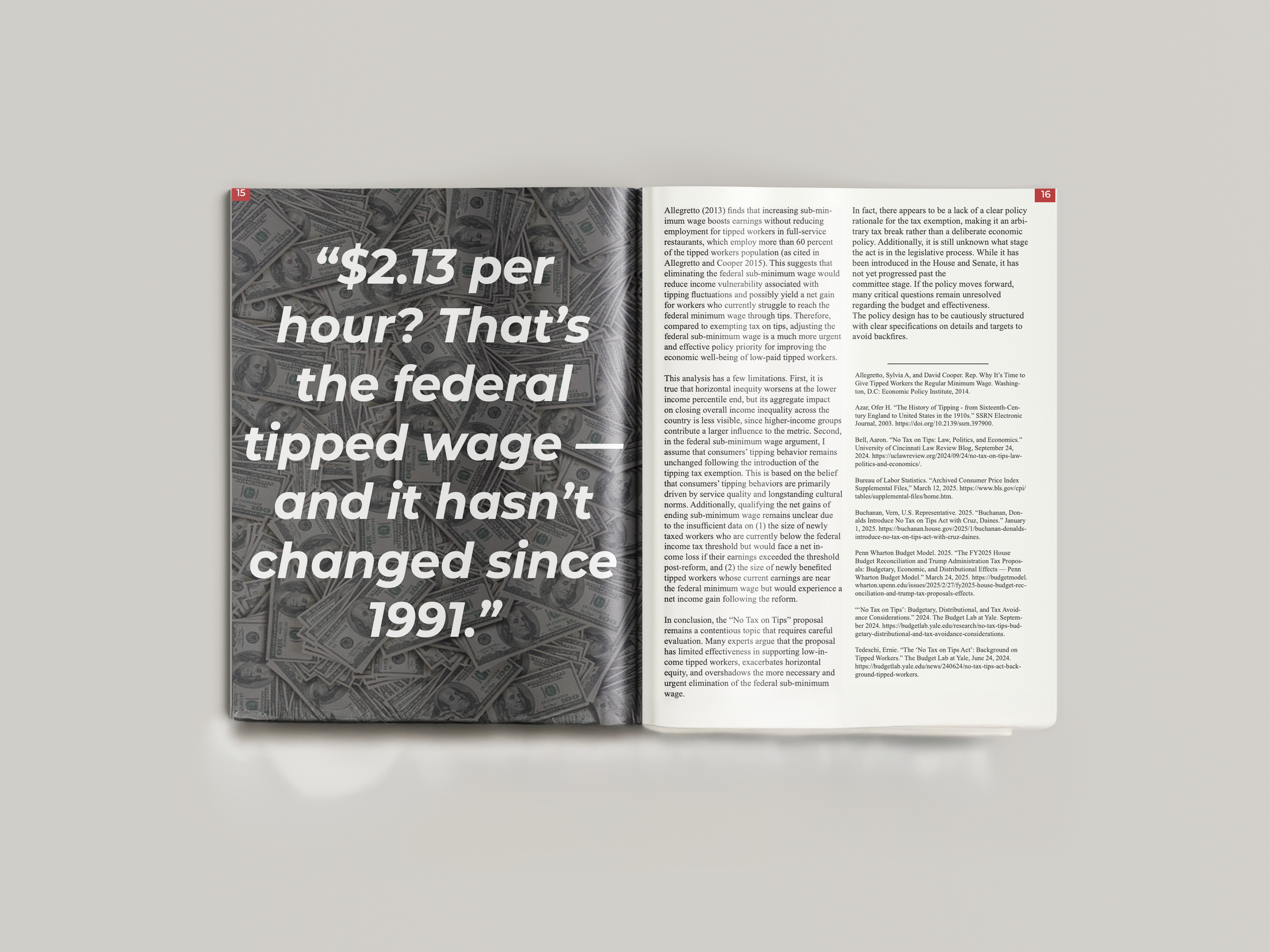
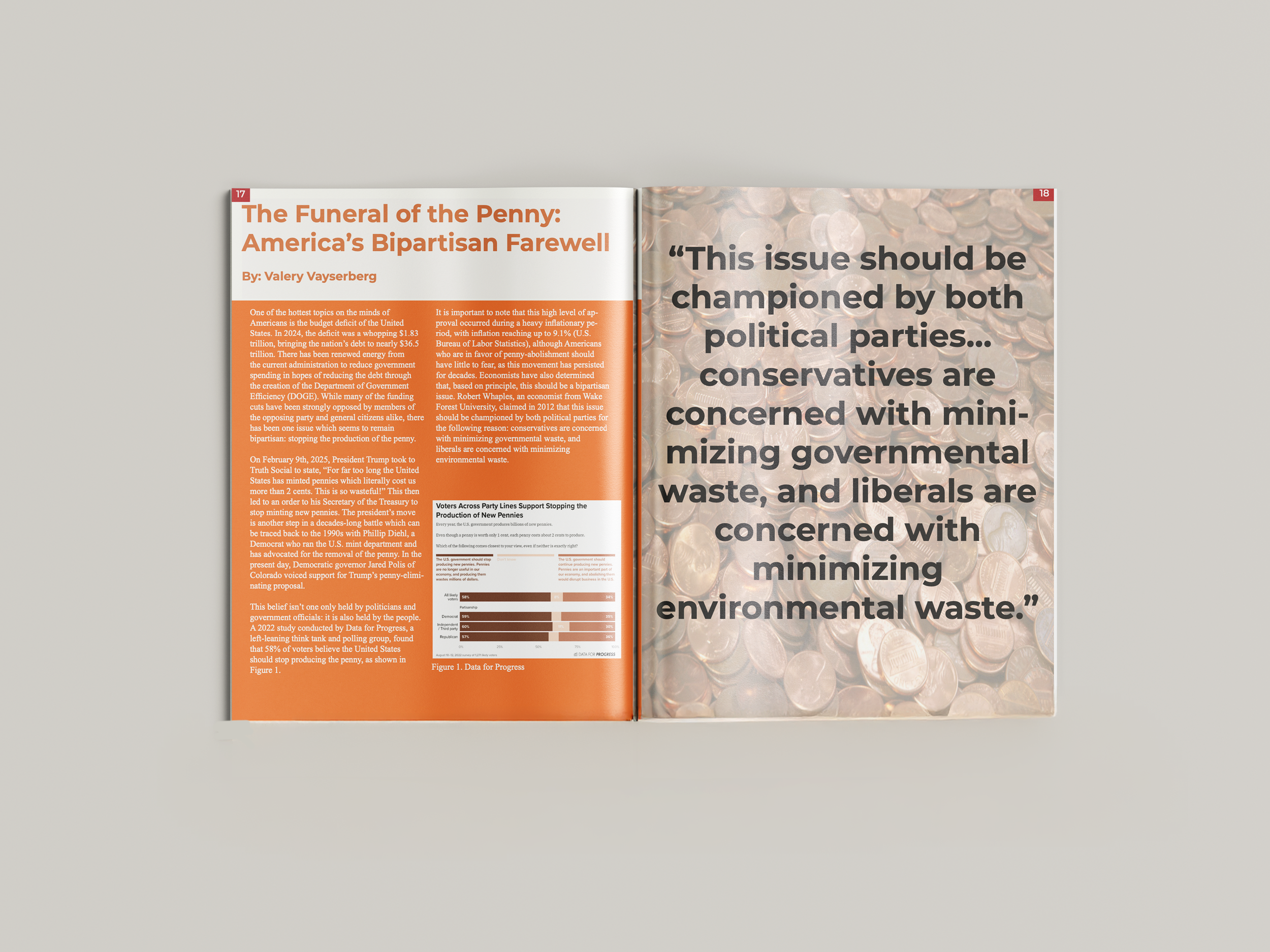
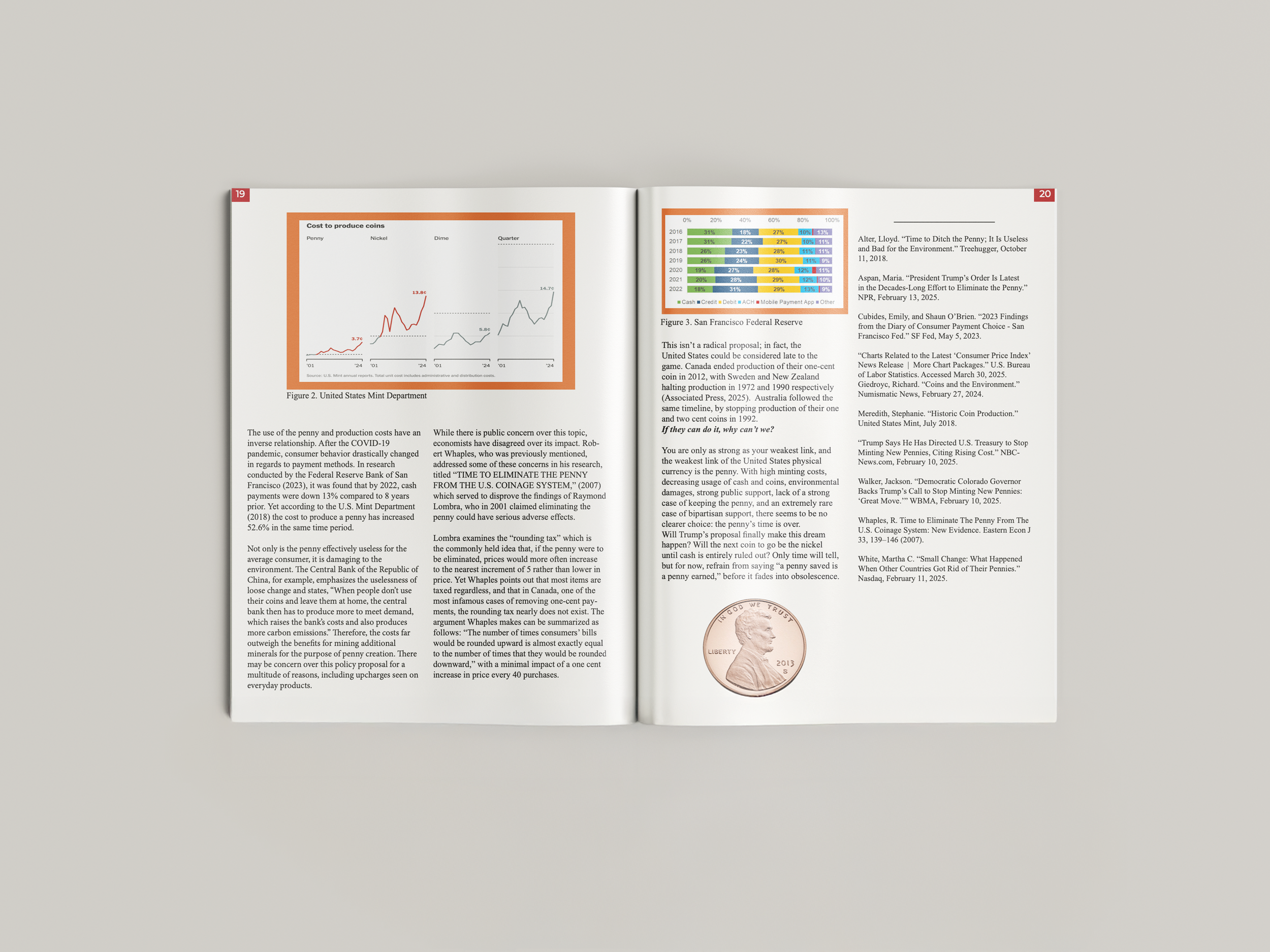
I made sure to incorporate elements from our idea board and design system while working closely with our color palette, which was inspired by UW–Madison’s iconic reds and Equilibrium’s recognizable blues. This combination brought a bold yet energetic feel to the publication. To make each spread visually engaging and distinct, we incorporated vibrant colors, large-scale imagery, color blocking, and custom cutout design elements. These choices helped create more dynamic layouts and prevented the pages from feeling flat or repetitive.
My partner designer and I made it a priority to meet on Zoom as soon as we were paired. Together, we created our idea board and a shared Google document to organize responsibilities and assign articles once the writers completed their drafts. Because we did not receive the finalized articles until just two weeks before the final draft deadline, we had to work efficiently and communicate consistently to stay on schedule.
Once our individual spreads were completed, we met in person to compile the magazine and ensure consistency across all pages. During this stage, we finalized details such as the Table of Contents and reviewed the publication as a whole. After submitting our first draft, we carefully reviewed the feedback and suggestions we received and made revisions quickly to avoid delaying the printing schedule.
Throughout the project, we worked extremely well together. We were both organized, managed our time effectively, and supported one another whenever we felt stuck or needed a second opinion. Our strong collaboration and communication allowed us to successfully complete the issue under a tight deadline while maintaining a high-quality final product.
Together, we created a unique addition to Equilibrium that successfully balanced creativity with the journal’s academic identity. Every stage of the project was completed on time, and the magazine was printed before graduation, allowing us to receive and keep physical copies of the final publication.
This project pushed me to rapidly execute a full-length editorial design under real-world constraints while collaborating closely with another designer. It strengthened my skills in visual communication, time management, and creative problem-solving, while giving me valuable hands-on experience blending visual creativity with academic professionalism.
During the last semester of my senior year at the University of Wisconsin–Madison, I took my Digital Studies minor capstone course, which focused on reflecting on the work we completed throughout the minor and demonstrating how we applied what we learned to our professional goals. During the semester, I was approached by our advisor, Amy Schultz, and asked to opt out of the capstone course to take on an internship with Equilibrium, the Undergraduate Journal of Economics at UW–Madison.
As part of this internship, I co-designed Volume 15 alongside another designer from my Digital Studies Capstone course. We divided responsibilities evenly and collaborated through a shared planning document, where we brainstormed visual aesthetics, mapped layouts, and explored ways to refresh the magazine’s visual identity while staying true to its established roots.
Our design problem was: How can we design the 15th volume of Equilibrium by incorporating UW–Madison culture, Equilibrium's brand, and the editors' articles to create a cohesive, themed, and well-structured magazine?
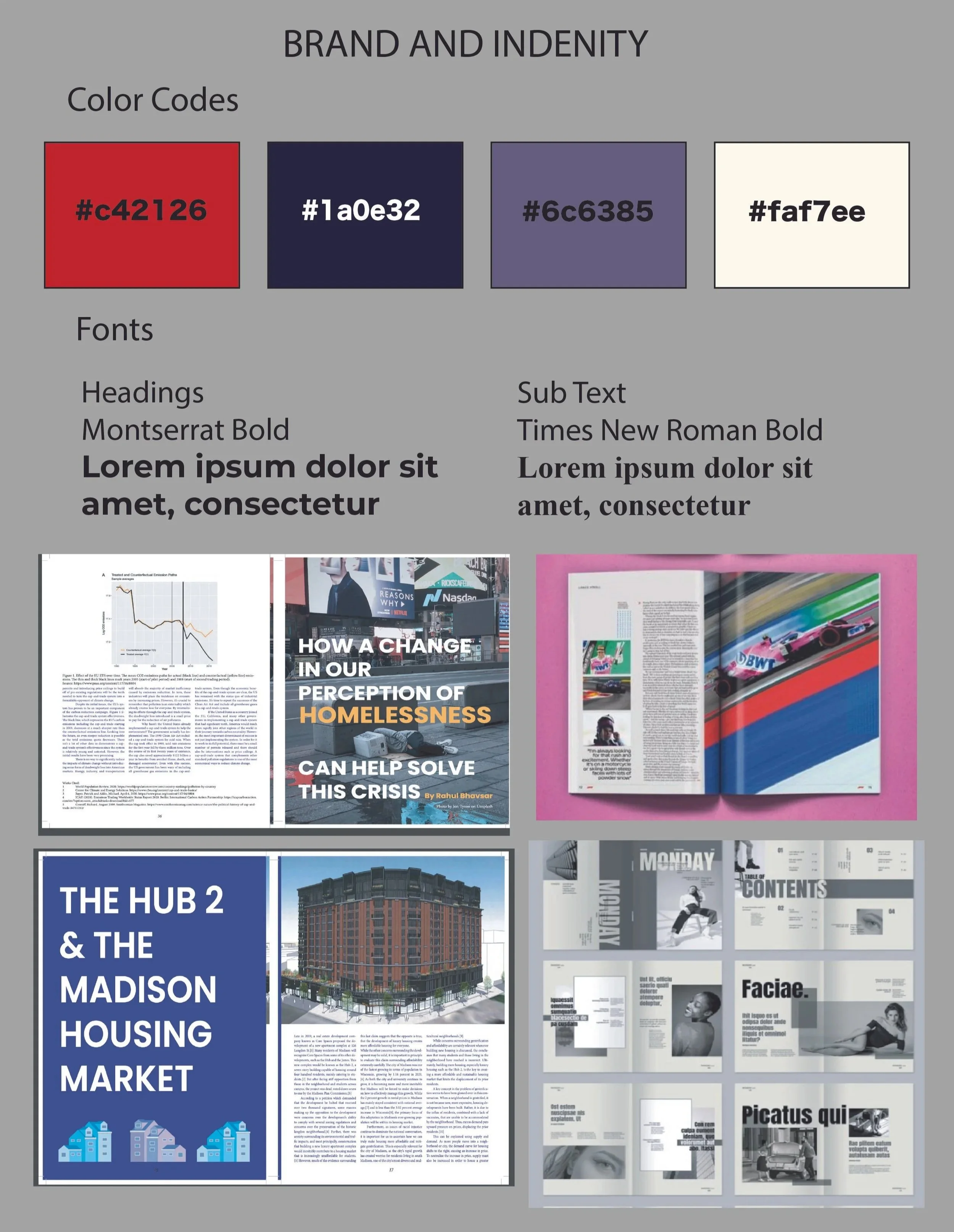
To begin our design process, we created a design template and idea board to help generate and organize concepts. This included heading and body fonts, color codes, and layout ideas for our spreads to ensure consistency across the magazine, even though we were working as two different designers. Having these guidelines in place gave us clear visual direction and served as a reference point whenever we felt uncertain about the design.
Spreads Continued
Letter from Editors, Table of Contents, and Five Articles